How a Street Art Marker Works: A Simple Guide for Beginners

Walk through any busy Indian lane and you may spot bold names, small doodles, and bright stickers on walls and shutters. Many of these were made with a street art marker. It looks like a normal pen, but it is built very differently. In this guide, you will learn how a street art marker works, what is inside it, and how to use it without wasting paint. Best Sketch Markers for Artists: A Simple Buying Guide
What Is a Street Art Marker?
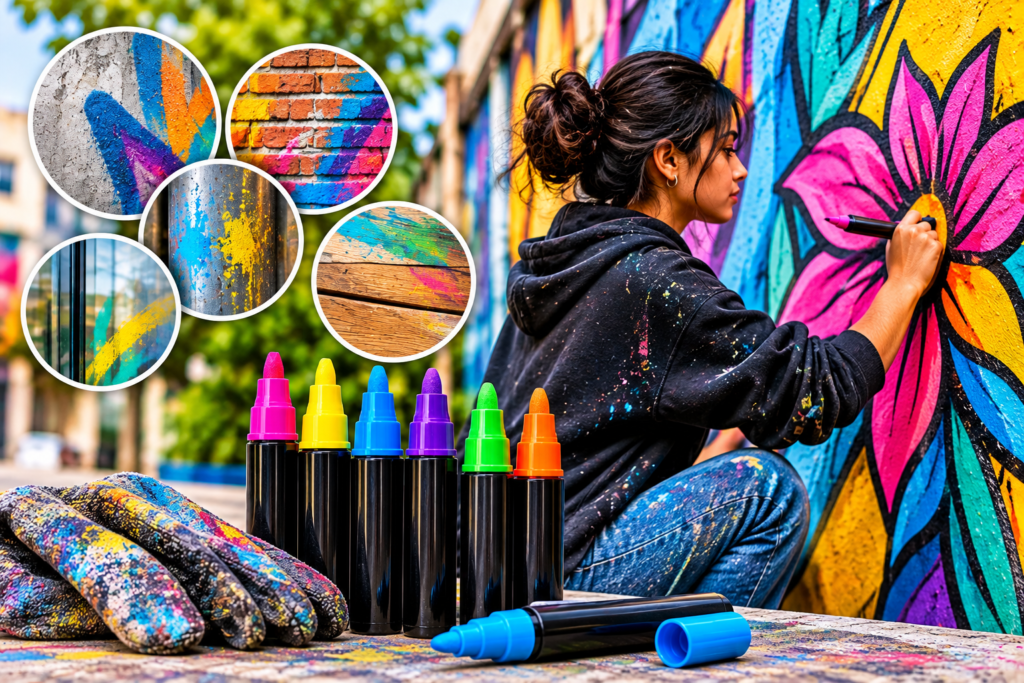
A street art marker is a thick, paint-filled pen made for drawing on rough and hard surfaces. Regular school markers are made for paper. Their ink fades fast and slides off glass or metal. This tool holds real paint, so the color stays bright and sticks to walls, metal, wood, glass, and plastic.
Artists use it for outlines, tags, small details, and quick sketches before painting a big mural.
What Is Inside the Marker?
Every marker has a few simple parts:
- Barrel: the outer body you hold, made of metal or plastic.
- Paint reservoir: a soft filler inside the barrel that holds paint like a sponge.
- Nib: the tip that touches the surface, made of fibre or firm foam.
- Valve: a small spring-loaded part behind the nib that controls how much paint flows out.
- Cap: keeps the nib wet and stops the paint from drying.
- Agitator ball: a tiny metal ball inside many markers that mixes the paint when you shake it. Best Selling Sketch Markers for Artists on Amazon India
How a Street Art Marker Works Step by Step
The idea behind it is simple. Pressing the nib opens the valve, and paint moves from the reservoir to the tip.
- Shake it. Paint settles at the bottom over time. Shake the marker with the cap on so the ball mixes the color and the liquid.
- Press the nib. Push the tip down on a scrap of paper. The valve opens and paint flows into the nib. Repeat a few times until the tip looks wet.
- Draw. Move the marker over the surface. Light pressure gives a thin line, and more pressure gives a thicker one.
- Lift. When you lift the marker, the spring closes the valve and the flow stops.
- Let it dry. The liquid part of the paint dries in the air, and the color stays behind as a hard coat.
Different Nib Types
The nib decides what kind of line you can make. Here are the common ones:
- Bullet tip: round and easy to control. A good first choice for beginners.
- Chisel tip: flat, so it makes both thick and thin lines. Great for lettering.
- Fine tip: best for small details and sharp outlines.
- Brush tip: gives smooth, flowing lines like a paintbrush.
- Mop or dabber tip: wide and soft, used to fill large areas quickly. Street Art Markers Under ₹1000: Top Picks for Walls, Metal and Canvas
Different Paint Types
Not every marker uses the same paint. Check the label before you buy.
- Water-based paint: has little smell and cleans up easily. It works well on paper, wood, and canvas, and suits beginners.
- Oil-based or alcohol-based paint: sticks better to metal, glass, and plastic, and lasts longer in sun and rain. It smells stronger, so use it in an open area.
- Acrylic paint: bright and thick, so it covers dark surfaces well and can be layered.
- Refillable markers: let you add fresh paint, which saves money over time.
Why Artists Choose a Street Art Marker
A marker gives control that a spray can does not. You can draw tiny details, there is very little mess, and it fits easily in a small bag. It is also quiet and has almost no smell in its water-based form. Beginners often use markers to practice letters and designs before moving to bigger walls. Many artists also carry one to sketch ideas while travelling between cities.
How to Use a Street Art Marker Properly
A few simple habits make your lines cleaner and your marker last longer:
- Clean the surface. Dust and oil stop paint from sticking. Wipe the surface with a dry cloth first.
- Test first. Try the marker on scrap paper or cardboard to check the flow.
- Hold it at a slight angle. This protects the nib and gives smoother lines.
- Work in thin layers. Let the first coat dry, then add another. Thick paint can drip or crack.
- Do not press too hard. Hard pressing floods the surface and wears the nib out early.
- Cap it quickly. An open nib dries within minutes.
- Store it flat. This keeps the paint spread evenly inside the barrel.
Common Problems and Easy Fixes
- Paint is not flowing: Shake the marker well and press the nib on scrap paper a few times.
- Lines look scratchy: The nib is probably dry. Press it gently until the color returns.
- Marker is leaking: You may have pressed too much. Wipe the tip on a tissue and store it flat.
- Color fades quickly: You may be using the wrong paint for that surface. Pick a permanent type, and add a clear varnish if needed.
- Nib is worn or split: Replace it if your marker allows, or buy a new one.
What to Check Before Buying
Art supply shops in most Indian cities stock paint markers, and many brands are also sold online. Look for the surface it works on, whether it is permanent, the nib size, and whether it is refillable. Start with one or two colors and a bullet tip. You can add more once you know what you like.
Safety and Permission
Always draw in places where it is allowed. In India, painting on someone else’s wall, a public building, or a heritage site without permission can lead to fines or legal trouble. Ask the owner first, or look for legal walls, community projects, and street art festivals. Use gloves, work in a place with fresh air, and keep paints away from children.
Final Thoughts
A street art marker is a simple tool with a smart design: a paint reservoir, a valve, and a nib working together. Once you understand how it works, it is easy to choose the right one and fix small problems yourself. Start with a water-based bullet tip, practice on paper, and then move to a wall with permission. Every big mural begins with small lines, and a good street art marker is often the first step.